The Master Blueprint for Superior Grinding Results
Achieving optimal grinding outcomes in a ball mill is often perceived as more of an art than a science—a delicate balance of intuition and experience. However, the difference between mediocre and exceptional results lies in a systematic, knowledge-driven approach. Sub-optimal performance manifests as extended processing times, inconsistent particle size distribution, undesired phase transformations, or contamination that ruins valuable samples. This comprehensive guide demystifies the process, providing a practical, step-by-step blueprint to unlock the full potential of your ball milling operations. We will navigate the entire journey, from making the fundamental choice of equipment to fine-tuning the most intricate process parameters, transforming your mill from a simple grinder into a precision instrument for material synthesis and processing.
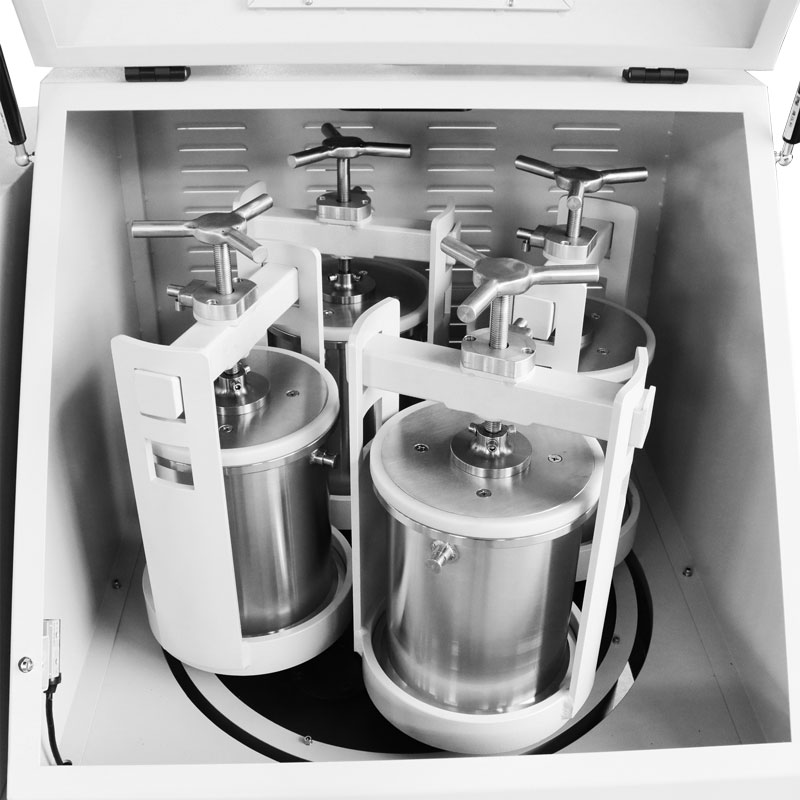
Vertical Square Row Planet Mill (XQM-20)
The path to superior grinding is not defined by a single “magic” setting but by the synergistic optimization of five interconnected pillars: the machine, the vessel, the tools, the process, and the protocol. Understanding and mastering each element is the key to repeatable, efficient, and high-quality results.
Step 1: The Foundation – Selecting the Right Ball Mill for Your Mission
The first and most critical decision is choosing the appropriate milling technology. The wrong type of mill will fight against your goals from the start.
Understanding the Core Technologies
-
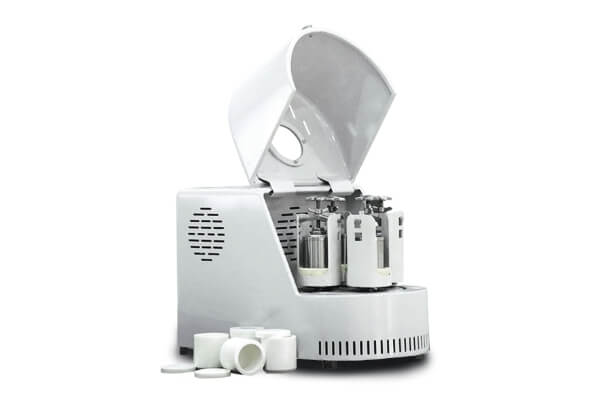
Planetary Ball Mills: The workhorse of R&D and small-scale production. They generate high grinding energies via the centrifugal forces from the rotation of the supporting disc and the counter-rotation of the grinding jars. They are ideal for rapid size reduction down to the nanometer range, mechanical alloying, and synthesizing materials via mechanochemistry. Choose this for: High-energy input, nano-grinding, lab-scale material synthesis, and when working with small sample volumes.
-
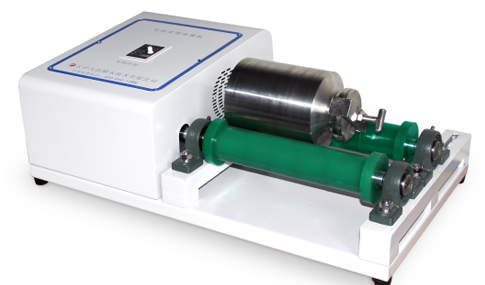
Roller (Jar) Ball Mills: Operate on a simpler principle, where cylindrical jars rotate horizontally around their axis. Grinding energy comes primarily from the cascading and dropping of the grinding media. They provide gentler, more uniform mixing and grinding with lower energy input. Choose this for: Blending, homogenizing, long-duration grinding of softer materials, and achieving very fine (but not necessarily nano-scale) powders with minimal temperature rise.
-
Stirred Ball Mills (Attritors): Utilize a central shaft with agitators to stir the grinding media within a stationary tank. They are exceptionally efficient for wet grinding, offering high energy density and excellent heat control due to external cooling jackets. Choose this for: Continuous or batch wet milling, dispersion of agglomerates in slurries (e.g., paints, ceramics), and achieving sub-micron particle sizes in liquid media.
Key Selection Criteria:
-
Material Hardness & Brittleness: Planetary mills excel on hard, brittle materials; roller mills are better for ductile or heat-sensitive ones.
-
Final Particle Size Target: Nano-range demands planetary or high-energy attritors; microns can often be achieved with roller mills.
-
Batch Size & Scalability: Consider volume needs from lab (grams) to pilot/production (kilograms).
-
Process Environment: Need for inert gas (argon) or vacuum? Ensure the selected mill model offers compatible jar sealing systems.
Step 2: The Crucible and Tools – Optimizing Jar and Media Selection
The grinding jar and media are the direct interfaces with your material. Their selection dictates contamination risk, grinding efficiency, and final purity.
Grinding Jar Material: A Critical Containment Choice
-
Stainless Steel: The standard for general-purpose grinding of non-reactive materials. Durable and cost-effective. Avoid for materials where iron contamination is prohibitive.
-
Hardened Steel & Tungsten Carbide: For extreme hardness and wear resistance. Used for grinding very hard materials but can introduce heavy metal contamination.
-
Zirconia (Yttria-Stabilized): An excellent balance of high hardness, high density (for strong impact), and very low wear. The premium choice for minimizing contamination while maintaining high grinding energy for ceramics, batteries materials, and chemicals.
-
Alumina (Agate/Corundum): Very hard and chemically inert. Ideal for applications demanding high purity, such as geological samples, electronics materials, and where metal traces must be avoided. More brittle than zirconia.
-
Polymer Jars (Nylon, PU, PTFE): Used when absolutely zero metallic contamination is required (e.g., for catalytic or biomedical powders) or for grinding soft, ductile materials. They offer lower energy input.
Grinding Media: The Engine of Comminution
The shape, size, and material of the grinding balls are paramount.
-
Material: Follows the same logic as jar selection. Always match or exceed the hardness of the jar to avoid jar wear. Zirconia media in zirconia jars is a classic high-performance, low-contamination setup.
-
Size: Smaller balls provide more contact points and finer grinding but lower impact energy. Larger balls deliver higher impact for breaking down coarse particles. A mix of sizes (e.g., a distribution of 5mm, 10mm, and 15mm balls) is often the secret to efficiency, as small balls fill voids and increase surface area for grinding, while large balls provide the brute force.
-
Ball-to-Powder Ratio (BPR): This is a golden parameter. A typical starting range is 10:1 to 20:1 by weight. A higher BPR increases milling energy and reduces processing time but may raise temperature. Optimization Tip: For mechanical alloying or hard materials, use a higher BPR (up to 30:1). For simple mixing or soft materials, a lower BPR may suffice.
Step 3: The Dance of Parameters – Fine-Tuning the Grinding Process
With the right hardware in place, mastering the software—the operational parameters—is next.
-
Milling Speed: Expressed as a percentage of the critical speed (the speed at which media centrifuge against the jar wall). Optimal speed is typically 65-85% of critical speed. Too low, and media cascade without sufficient impact; too high, and media centrifuge, eliminating grinding action and causing excessive wear.
-
Milling Time: There is a point of diminishing returns. Over-milling can lead to particle re-agglomeration, amorphization, or excessive temperature rise. Use timed trials with particle size analysis to find the optimal duration.
-
Pause Cycles & Direction Reversal: Continuous milling generates heat. Using intermittent cycles (e.g., 10 minutes milling, 5 minutes pause) allows heat dissipation, protecting temperature-sensitive materials. Auto-reverse functions help prevent material from packing in one direction, promoting uniformity.
-
Wet vs. Dry Milling: Wet milling (using a process fluid like water, alcohol, or hexane) is often more efficient. The liquid reduces agglomeration, dissipates heat, and can aid in particle dispersion. It’s essential for achieving the finest particle sizes and for materials that are prone to cold welding in dry milling.
Step 4: The Invisible Enemy – Controlling Contamination and Heat
Two of the most common yet overlooked culprits for poor results are contamination and overheating.
-
Cross-Contamination: Dedicate jars and media to specific materials. A jar used for tungsten carbide will forever contaminate subsequent ceramic powders. Implement a strict lab protocol for jar cleaning and assignment.
-
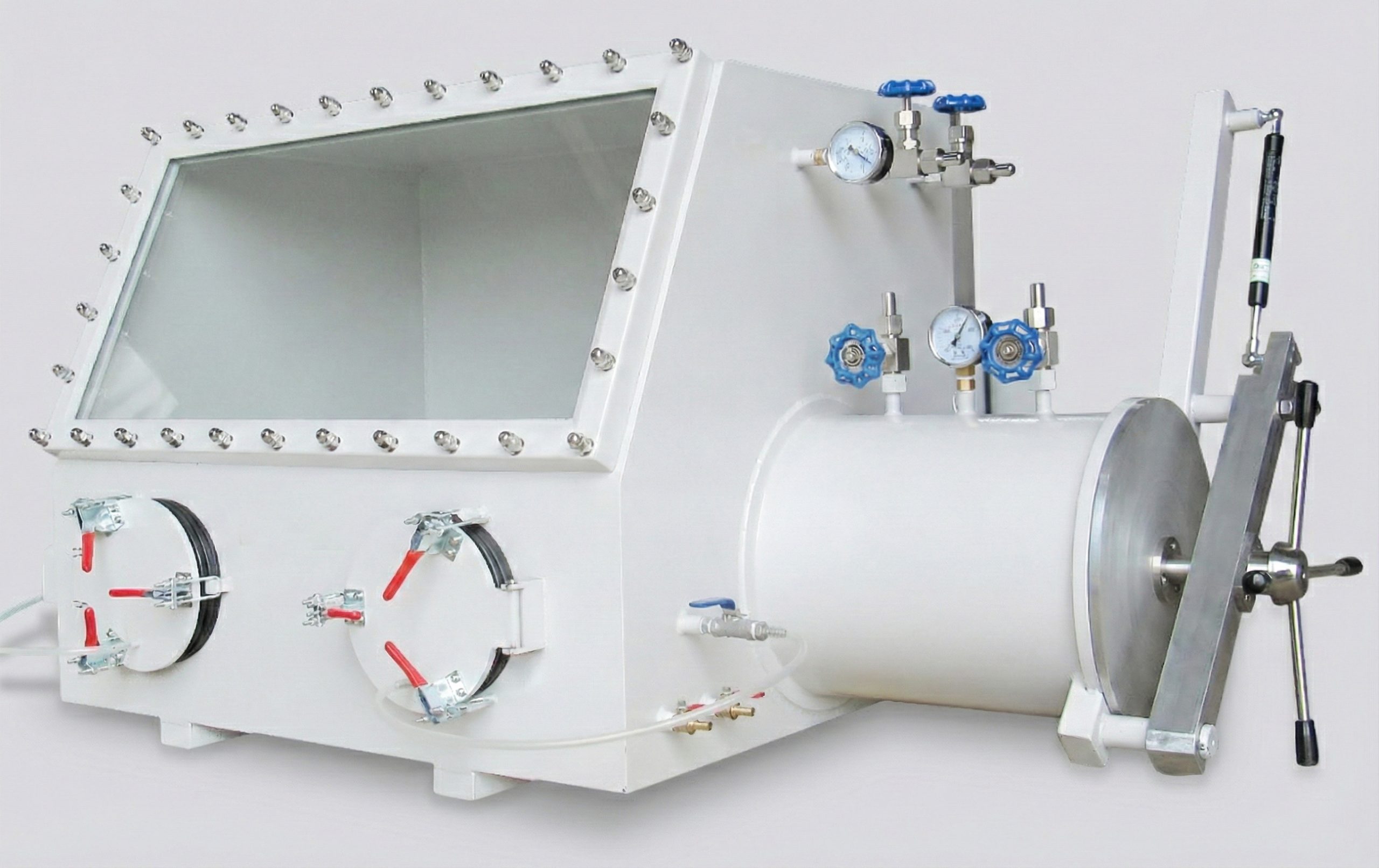
Atmospheric Contamination: For air-sensitive materials (e.g., battery electrodes, rare-earth alloys), standard jars are insufficient. Vacuum or gas-purged milling jars are mandatory. These specialized vessels allow you to evacuate air and backfill with an inert gas like argon, preventing oxidation and chemical degradation during the process.
-
Temperature Management: High local temperatures can cause phase changes, induce unwanted reactions, or degrade polymers. Besides using pause cycles and wet milling, consider specialized equipment like cryogenic ball mills that use liquid nitrogen to cool the grinding chamber, essential for biological samples, plastics, or volatile compounds.
Step 5: The Cycle of Excellence – Maintenance, Calibration & Data-Driven Optimization
Peak performance is not a one-time setup; it’s a continuous practice.
-
Preventive Maintenance: Regularly inspect and replace worn seals, especially on vacuum jars. Check drive belts and gears for tension and wear. Lubricate moving parts as per the manufacturer’s schedule to ensure consistent speed and power delivery.
-
Calibration: Periodically verify the tachometer reading against a calibrated laser tachometer. An incorrect speed readout means you are not operating at your intended optimal point.
-
The Feedback Loop – Characterize Your Output: This is non-negotiable. Use Particle Size Analyzers (PSA), Scanning Electron Microscopy (SEM), and X-ray Diffraction (XRD) to quantify your results. Particle size distribution tells you about grinding efficiency, SEM reveals morphology, and XRD can detect phase changes or amorphization. Let this data guide your parameter adjustments in Step 3.
Conclusion: From Simple Tool to Strategic Asset
Optimizing a ball mill is a holistic engineering challenge. By methodically addressing equipment selection, consumable configuration, process parameters, contamination control, and systematic maintenance, you transform a basic piece of machinery into a reliable, high-performance asset. The goal shifts from simply “grinding stuff” to precisely engineering material properties—whether it’s creating a high-surface-area catalyst, a uniformly blended ceramic powder for sintering, or a nano-structured alloy with enhanced strength. This mastery not only saves significant time and cost by reducing trial-and-error but also unlocks new possibilities in material design and synthesis. Begin by auditing your current process against these five steps; the pathway to your next breakthrough in powder processing likely starts with a single, optimized adjustment.