The Art of Material Sculpting: Unlocking the Secrets of Vacuum Ball Milling
In the quest to engineer materials with unprecedented properties—unmatched strength, exceptional conductivity, or tailored chemical reactivity—scientists face a fundamental challenge. Traditional synthesis and processing methods often introduce impurities, induce unwanted oxidation, or fail to achieve the atomic-level homogeneity required for breakthrough performance. Enter vacuum ball milling, a sophisticated processing technique that transcends conventional grinding. It is less a simple crushing operation and more akin to a form of high-energy, precision “sculpting” conducted within the pristine confines of a controlled atmosphere. This process is unlocking pathways to materials once confined to theory, positioning itself as a cornerstone technology for future innovation.
At its core, ball milling is a mechanical alloying and refinement process. However, by removing air and replacing it with an inert gas like argon or maintaining a hard vacuum, the entire paradigm shifts. The process is liberated from the detrimental effects of oxygen and moisture, allowing for the manipulation of matter in its purest form. This controlled environment is the canvas upon which the next generation of functional materials is being painstakingly crafted.
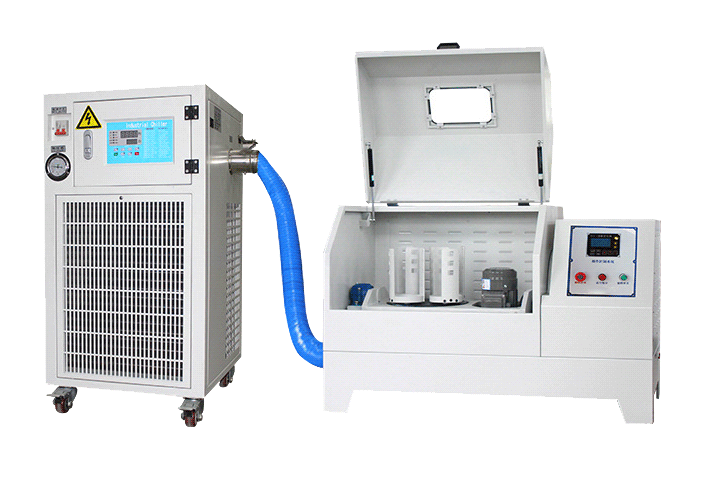
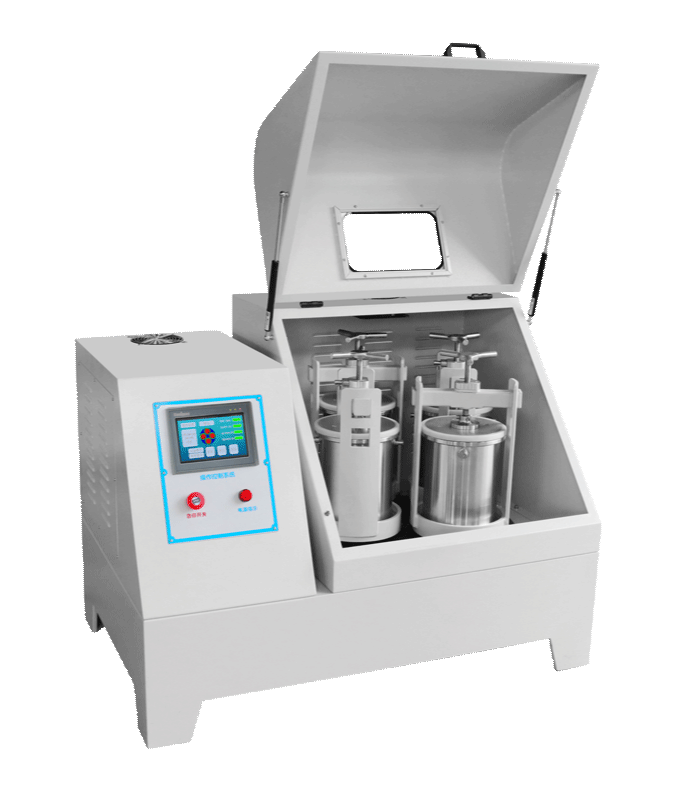
Low-temperature planetary ball mill
Why Atmosphere Matters: The Science Behind the Vacuum Seal
The difference between standard and vacuum ball milling is not merely incremental; it is transformative. The presence of air fundamentally alters the chemistry and physics at the particle level.
-
Preventing Oxidation and Nitridation: Reactive metals (e.g., titanium, aluminum, magnesium) and their alloys readily form oxide and nitride surface layers when milled in air. These layers act as barriers, preventing true atomic diffusion and alloy formation. In a vacuum or inert gas, these reactions are suppressed, enabling the creation of clean, active metallic surfaces that can fuse and alloy at the nanoscale.
-
Eliminating Moisture-Induced Contamination: Water vapor can lead to hydrolysis, the formation of hydroxides, and general contamination. For sensitive materials like lithium-based compounds for batteries or rare-earth magnets, even trace moisture can degrade performance. Vacuum milling ensures a dry environment critical for maintaining stoichiometry and phase purity.
-
Controlling Reaction Pathways: By removing reactive gases, researchers can guide mechanochemical reactions along desired pathways without atmospheric interference, enabling the synthesis of novel compounds that are unstable in air.
The Core Mechanism: More Than Just Grinding
Vacuum ball milling is a dynamic, complex process where energy is transferred from the milling media to the powder particles through high-energy impacts, shear, and compression.
-
Mechanical Alloying: Repeated cold-welding, fracturing, and re-welding of dissimilar powder particles in a solid state, leading to the formation of homogeneous alloys from elements that are immiscible under conventional melting.
-
Nanostructuring: The severe plastic deformation introduced during milling creates a dense network of grain boundaries, refining the crystal structure down to the nanometer scale. This significantly enhances material properties like strength and wear resistance (Hall-Petch strengthening).
-
Mechanochemical Synthesis: The mechanical energy can directly induce chemical reactions between solid precursors at room temperature, creating novel compounds without the need for high-temperature furnaces.
Key Advantages Shaping the Future
The unique environment of vacuum ball milling confers several decisive advantages for advanced material development.
-
Synthesis of Metastable and Amorphous Phases: The non-equilibrium processing conditions allow for the creation of materials in unusual, metastable states—such as amorphous alloys or supersaturated solid solutions—which often exhibit superior catalytic, magnetic, or mechanical properties.
-
Production of Ultra-Fine and Nanopowders: The process excels at reducing particle size to the sub-micron and nano range while minimizing agglomeration and surface contamination, a critical requirement for catalysts, conductive inks, and advanced ceramics.
-
Enhanced Sinterability: Powders milled in vacuum possess clean, active surfaces and high stored energy, leading to lower sintering temperatures and denser final products in ceramic and powder metallurgy applications.
-
Safe Processing of Pyrophoric Materials: Highly reactive materials that would ignite spontaneously in air can be safely handled and processed within the sealed, inert environment of the milling vessel.
Transformative Applications: From Lab to Industry
This technology is not a mere academic curiosity; it is actively driving progress in several high-stakes fields.
-
Next-Generation Energy Storage: Critical for synthesizing and processing advanced anode and cathode materials for lithium-ion and solid-state batteries. For instance, silicon anodes, which suffer from massive volume expansion, can be composited with carbon matrices via vacuum milling to improve stability. Similarly, new sulfide-based solid electrolytes are processed in inert atmospheres to prevent degradation.
-
High-Performance and Lightweight Alloys: Enabling the development of advanced aluminum, magnesium, and titanium alloys with superior strength-to-weight ratios for aerospace and automotive applications, where oxide-free interfaces are crucial for performance.
-
Thermoelectric Materials: The efficiency of thermoelectric materials relies on complex nanostructuring to decouple electrical and thermal conductivity. Vacuum ball milling is a key technique for creating the required fine-grained, composite structures.
-
Catalyst Design: Producing highly dispersed, nanostructured catalyst powders with large surface areas and controlled compositions, essential for applications in hydrogen production, fuel cells, and environmental catalysis.
Components of a Modern Vacuum Ball Milling System
A reliable system extends beyond the mill itself, encompassing a fully integrated solution.
-
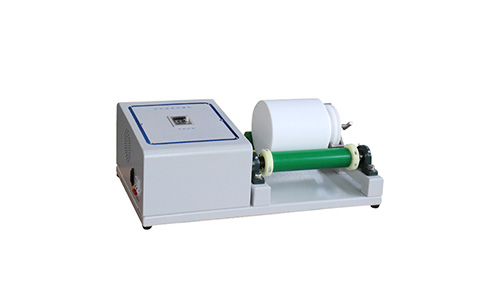
The Milling Platform: A robust planetary ball mill designed for stable operation under vacuum conditions, featuring a powerful drive system and a securely sealed milling chamber interface.
-
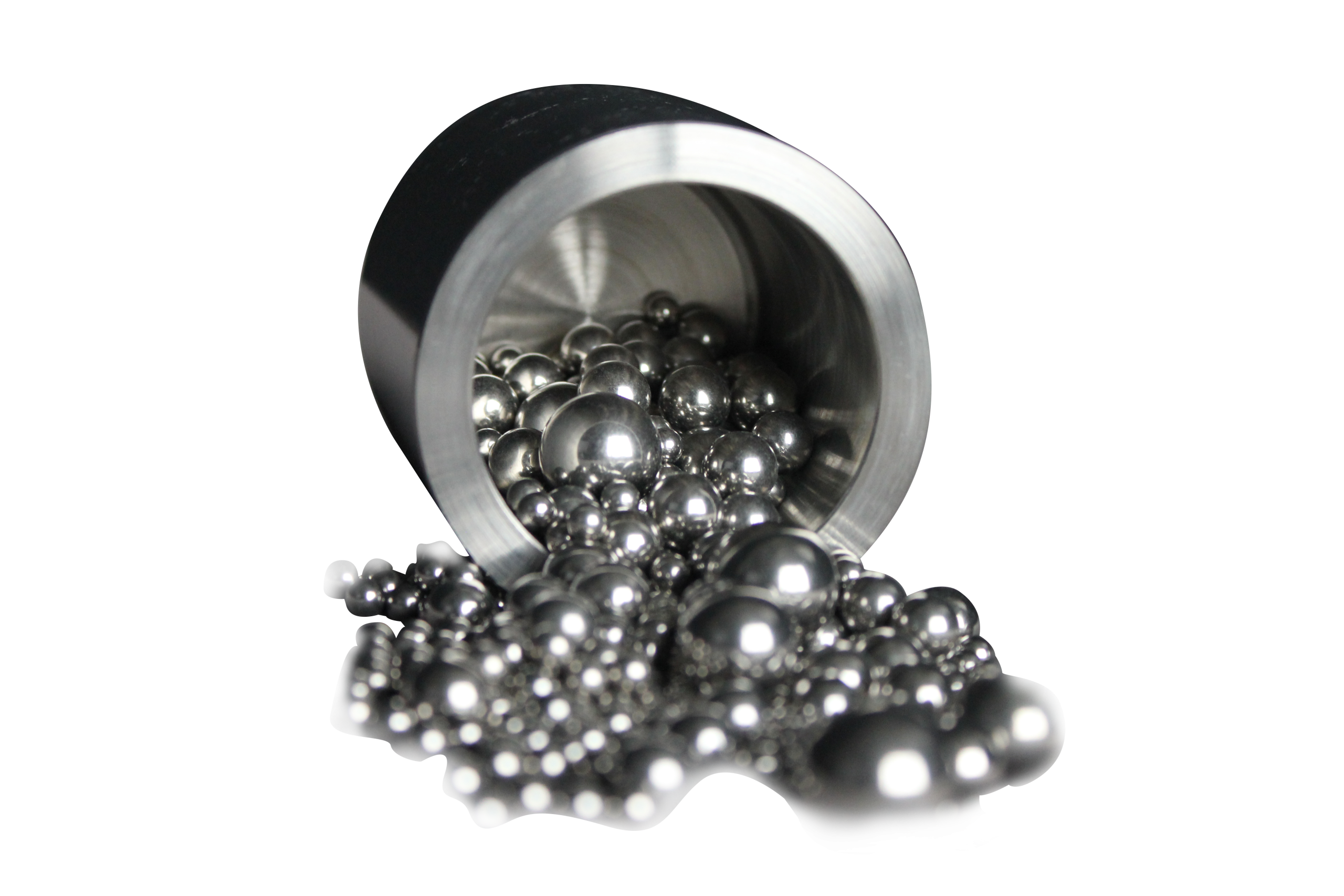
Specialized Vacuum Milling Vessels: These are the heart of the process. They are precision-engineered from materials like stainless steel, hardened steel, or tungsten carbide, featuring heavy-duty seals (O-rings or metal gaskets), gas inlet/outlet valves, and often a pressure gauge. They must withstand repeated vacuum/purge cycles and high mechanical stress.
-
Ancillary Equipment: A vacuum pump to evacuate the vessel, a gas manifold for backfilling with inert gas, and safety interlocks are essential for proper operation.
Selecting the Right Tools for Precision “Sculpting”
Choosing appropriate parameters is critical for success.
-
Milling Media and Jar Material: The selection (e.g., zirconia, stainless steel, tungsten carbide) must consider contamination risk, hardness, and impact energy. Jar material must be compatible with both the powder and the vacuum environment.
-
Process Parameters: Rotational speed, milling time, ball-to-powder weight ratio, and atmosphere (static vacuum vs. flowing inert gas) are carefully optimized for each material system.
-
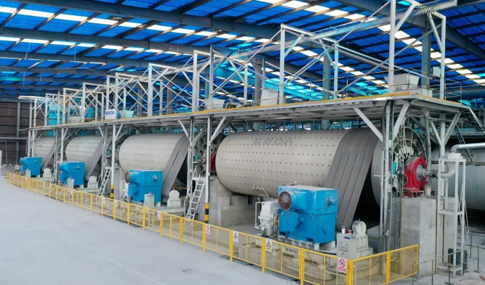
Scalability: The process must be translatable from small R&D batches (using lab-scale mills with 50-500 ml jars) to pilot or production scale, maintaining consistency of the milled product.
Engineering the Future, One Particle at a Time
Mastering vacuum ball milling technology requires deep expertise in both mechanical engineering and materials science. Success hinges on partnering with equipment providers who understand that the milling vessel is a critical reaction chamber, not just a container. A manufacturer with a proven track record in precision powder technology will deliver systems that guarantee seal integrity, operational safety, and repeatable results—transforming a complex technique into a reliable, everyday tool for innovation.
The Horizon: Intelligent and Integrated Processing
The future points towards smarter systems. Imagine milling vessels equipped with in-situ sensors monitoring temperature and pressure, linked to adaptive controls that adjust milling energy in real-time. Further integration with glove boxes for powder handling and advanced diagnostics will create seamless, closed-loop workflows for discovering and optimizing the materials of tomorrow.
Conclusion
Vacuum ball milling represents a paradigm shift in material synthesis and processing. By providing a high-purity, oxygen-free arena, it allows researchers and engineers to “sculpt” matter at the micro and nanoscale with unprecedented control. It breaks the constraints imposed by atmospheric chemistry, opening the door to metastable phases, novel alloys, and ultra-pure nanocomposites that are essential for technological leaps in energy, transportation, and advanced manufacturing. Investing in mastering this powerful technique is not merely an equipment purchase; it is an investment in the capability to design and fabricate the foundational materials that will shape the future.