For decades, the vacuum glovebox has been a stalwart of laboratories handling air-sensitive materials. Its role was primarily protective: a sealed haven to shield reactive compounds from oxygen and moisture. While this remains vital, a significant evolution is underway. The latest generation of glovebox systems is breaking free from its ancillary role and is being re-engineered as the central, integrated process hub for advanced fabrication. The hottest trend is no longer just about achieving lower ppm levels—it’s about intelligently connecting the glovebox to the tools that shape the future, from 3D printers to robotic arms.
This shift is driven by industries that cannot tolerate any atmospheric exposure during fabrication, not just storage or simple assembly. The goal is a seamless, automated workflow where a material or component is never exposed to air from raw powder to finished part.
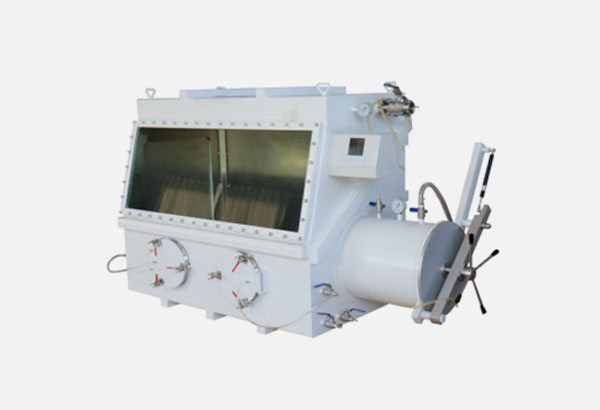
Stainless steel vacuum glove box
The Market Context: Growth Fueled by Advanced Manufacturing
The global market for these sophisticated containment solutions continues to expand, projected to grow steadily. This growth is fueled by sectors where material purity dictates product performance:
-
Advanced Additive Manufacturing (AM): Processing reactive metal powders (e.g., titanium, aluminum, specialty alloys) for aerospace, medical, and automotive components.
-
Next-Generation Energy: Beyond solid-state batteries, this includes the handling of fuels and materials for hydrogen economy technologies and advanced nuclear applications.
-
Specialty Chemicals & Pharmaceuticals: Development and production of pyrophoric catalysts, organometallic compounds, and air-sensitive active pharmaceutical ingredients (APIs).
The Integration Imperative: Beyond a Stand-Alone Chamber
The core of the current technical evolution is physical and process integration. The most advanced gloveboxes are now designed with standard and custom interfaces (like ISO-KF flanges or proprietary quick-connects) that allow them to be bolted directly onto other major equipment, creating a closed-loop manufacturing cell.
1. Glovebox-Integrated Additive Manufacturing (Metal 3D Printing)
This is one of the most significant advancements. Systems are now available where the build chamber of a selective laser melting (SLM) or electron beam melting (EBM) metal 3D printer is fully enclosed within a large glovebox workspace.
-
Process: The entire powder handling, recycling, build plate mounting, and part removal process occurs inside the inert (<10 ppm O₂/H₂O) atmosphere.
-
Benefit: It eliminates the fire and explosion risk associated with fine, reactive metal powders and prevents oxidation during the printing process, which is critical for maintaining the mechanical integrity and material properties of printed titanium or aluminum alloy parts. This enables the production of components for critical applications without post-print contamination.
2. Robotic Automation Inside and Through the Glovebox
To achieve true high-throughput and eliminate human variability, robotics are being deployed in two key ways:
-
Internal Robotic Manipulators: Articulated arms mounted inside the glovebox perform repetitive, precise tasks such as sample transfer, weighing, loading/unloading of process tools (e.g., a compact furnace or a sputter coater also housed inside), and basic assembly.
-
External Robot Integration with Dynamic Sealing: More complex systems feature external robots whose end-effectors can enter the glovebox through specially designed membrane seals or load-lock chambers. This allows an external robot to pick up a part from a conveyor, place it inside the glovebox for a coating or treatment process, and retrieve it—all without breaking the inert atmosphere.
3. Hybrid System “Farms” for R&D
Leading research institutions and corporate R&D centers are investing in modular glovebox lines where multiple process stations are interconnected. A single component can travel via internal transfers or robotic carts between modules for:
-
Weighing and mixing in a preparation glovebox.
-
Being formed or printed in an AM-integrated glovebox.
-
Moving to a heat treatment glovebox with an integrated furnace.
-
Finally, being characterized in a glovebox coupled to an analytical instrument like a scanning electron microscope (SEM) or X-ray diffractometer (XRD) with a vacuum transfer vessel.
Key Technical Specifications for an Integrated Future
Selecting or designing a glovebox for these integrated roles requires scrutiny beyond basic purity specs:
-
Ultra-High Purity & Fast Recovery: Systems must maintain <1 ppm O₂/H₂O consistently, even with frequent internal manipulation and transfer lock use. High-capacity, regenerable purification columns and powerful circulation are mandatory.
-
Structural Rigidity & Vibration Damping: Integrating heavy equipment (like a 3D printer) requires a reinforced frame. For processes sensitive to micro-vibrations (e.g., certain optical coatings), active damping systems may be needed.
-
Advanced Transfer Ports & Interlocks: Large-volume rapid-transfer ports (RTPs) and load-locks with programmable purge cycles are essential for moving sizeable components or tools in and out efficiently.
-
Comprehensive Control & Data Logging: Industrial PLCs and SCADA interfaces are needed to synchronize the glovebox’s environment (pressure, gas purge, purification cycle) with the operational cycle of the integrated equipment, with full data traceability.
Future Outlook: The Glovebox as a Standard Industrial Machine Tool
The trajectory is clear. The vacuum/inert atmosphere glovebox is transitioning from a specialty laboratory safety device to a standardized, integratable industrial process module. In the factories of the near future, a “glovebox work cell” will be as common as a CNC milling station is today, specified for any fabrication process involving sensitive or high-value materials.
For researchers and engineers, this means process design can now start with the question: “How can we perform the entire value chain in an inert environment?” rather than “How do we protect the material during the few steps we can manage inside the box?” This paradigm shift, centered on deep system integration, is defining the new era of the vacuum glovebox and expanding the horizon of what is manufacturable.


-拷贝-scaled.png)