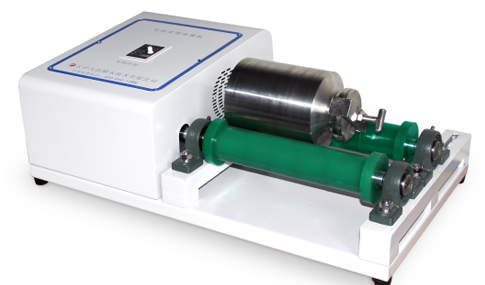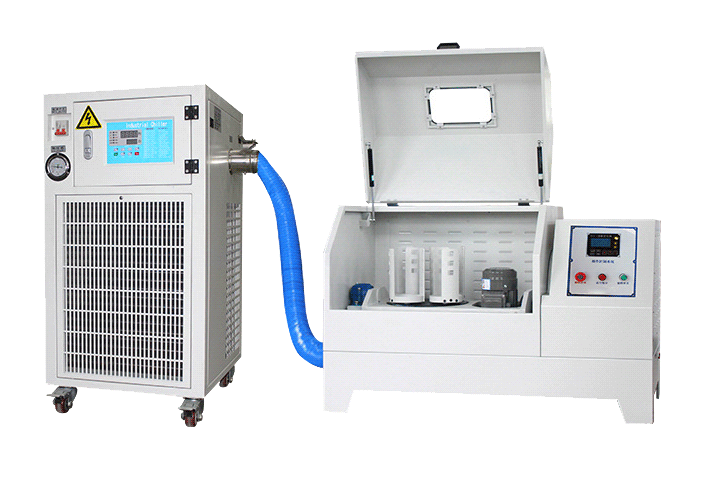

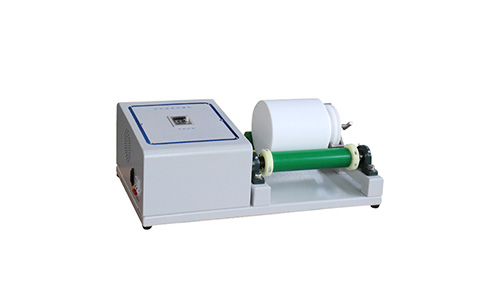
A jar mill, also called a roller ball mill, is a versatile grinding and mixing device. It uses rotating rubber rollers to turn mill jars. This creates controlled tumbling action for particle size reduction and material mixing. The key advantages include an elegant, stylish design, a compact structure, easy operation, high efficiency, and uniform granule size. It is the preferred equipment for research, education, experiments, and small-batch production. Unlike planetary or vibratory mills that use complex systems, jar mills use a simple principle.Mill jars sit on driven rubber rollers that spin at the best speed.This makes the grinding media tumble, cascade, and shear the material into fine powder. At Changsha Tianchuang Powder Technology Co., Ltd. (TENCAN), our jar mills are engineered with optimal rotating speed design, timing control panels with pausing and accumulative timing functions, and durable rubber rollers, serving industries from electronic materials and magnetic materials to biological medicine, ceramic glaze, and new materials development.
A jar mill, commonly referred to as a roller ball mill or rolling ball mill, is a type of grinding equipment used primarily in laboratories and for small-batch production. It consists of one or more rotating rollers that drive cylindrical mill jars containing grinding media and the material to be processed.
Core Components:
Roller System: Driven rubber rollers that rotate at precisely controlled speeds to rotate the mill jars. The rollers are made of special durable materials for long service life.
Mill Jars: Cylindrical containers that hold the grinding media and material, available in various materials including stainless steel, corundum ceramic, zirconia, agate, nylon, polyurethane, and PTFE.
Drive System: Motor with frequency converter for variable speed control, allowing optimization of rotation speed for different applications.
Control Panel: Timing control system with functions for pausing and accumulative timing, enabling precise programming of working cycles.
Frame: Sturdy support structure that maintains roller alignment and stability during operation.
Safety Features: Optional safety covers and emergency stop mechanisms for operator protection.
Working Principle:
When the jar mill operates, the motor drives the rubber rollers to rotate. The mill jars, placed on these rollers, are dragged into rotation by friction between the jar surface and the rubber rollers. As the jars rotate, the grinding media and materials inside are lifted to a certain height along the jar wall. When the gravitational force exceeds the centrifugal force, the media and materials cascade down, creating three distinct grinding actions:
Impact Force: As the grinding media fall from the top of the jar, they strike the material below, crushing larger particles through direct impact.
Friction Force: The rolling and sliding motion of media against each other and the jar wall creates frictional forces that abrade particle surfaces.
Shearing Force: The relative motion between media layers generates shearing action that effectively disperses and grinds materials.
The optimal rotation speed is critical for efficient grinding. If the speed is too low, the media simply slide without cascading; if too high, centrifugal force pins media against the wall, preventing grinding action. TENCAN jar mills feature optimal speed design that ensures proper cascading motion for maximum grinding efficiency.
Key Technical Parameters:
Number of stations: 2, 4, 8, or 16 stations available
Jar capacity: From 1 L to 20 L per jar (larger available for special models)
Roller length: 609 mm to 976 mm depending on model
Rotation speed range: 40-570 rpm (adjustable with frequency converter)
Motor power: 0.37 kW to 2.2 kW
Maximum load per jar: 35 kg to 120 kg
Power supply: 110V or 220V single phase, 380V three phase for larger models
TENCAN jar mills are manufactured with exquisite workmanship, featuring precise engineering and humanized design for convenient operation. Our commitment to quality is reflected in ISO9001, CE, and SGS certifications, ensuring every instrument meets international standards.
The unique roller-based design of jar mills offers fundamental advantages over other grinding technologies, making them indispensable for specific laboratory and small-scale production applications.
Simplicity and Reliability: With no complex internal mechanisms, jar mills are exceptionally reliable and easy to maintain. The only moving parts are the rollers and drive system, minimizing potential failure points and reducing maintenance requirements.
Versatile Jar Compatibility: A single jar mill can accommodate multiple jar sizes within a certain range by simply adjusting the space between rubber rollers. This flexibility allows laboratories to process different batch sizes without investing in multiple machines. TENCAN jar mills accept jars from 1 L to 20 L with adjustable roller spacing.
Contamination-Free Grinding: Since the material only contacts the jar and grinding media, contamination is limited to those materials. By selecting appropriate jar and media materials (stainless steel, agate, zirconia, etc.), users can achieve virtually contamination-free grinding for high-purity applications.
Dual Grinding Modes: Jar mills excel at both dry and wet grinding without modification. Dry grinding produces free-flowing powders; wet grinding with liquids prevents dust generation and achieves finer particles through improved dispersion.
Uniform Particle Size Distribution: The cascading action produces a uniform grinding environment throughout the jar, resulting in narrow particle size distributions essential for quality control and subsequent processing.
Scalability: Results obtained from laboratory jar mills can be directly scaled to production-sized equipment, making them invaluable for process development. The grinding mechanisms are identical regardless of scale.
Quiet Operation: The rubber roller drive system absorbs vibration and reduces noise compared to direct-drive mills, creating a more comfortable laboratory environment.
Programmable Operation: TENCAN jar mills feature timing control panels with pausing and accumulative timing functions. Users can set working time according to requirements, with automatic stop at cycle completion, saving time and labor while ensuring reproducibility.
Multiple Station Options: From single-station to sixteen-station models, TENCAN offers configurations that match throughput requirements. Multi-station mills allow simultaneous processing of different materials or replicates for statistical studies.
Cost-Effectiveness: Compared to planetary or vibratory mills, jar mills offer an economical solution for routine grinding applications while delivering excellent performance for most materials.
Jar mills are available in various configurations to suit different applications, from occasional laboratory use to continuous small-batch production. Understanding these options helps in selecting the optimal system.
| Model | Dimensions (mm) | Weight (kg) | Motor Power | Roller Length | Max Load/Jar |
|---|---|---|---|---|---|
| GQM-4-5 (Single Layer) | 890×660×690 | 70 | 0.75 kW | 609 mm | 35 kg |
| GQM-4-15 | 1040×800×690 | 95 | 1.5 kW | 762 mm | 80 kg |
| GQM-4-20 | 1270×820×690 | 122 | 2.2 kW | 916 mm | 120 kg |
| Model | Dimensions (mm) | Weight (kg) | Motor Power | Roller Length | Max Load/Jar |
|---|---|---|---|---|---|
| GQM-8-5 | 890×660×690 | 106 | 1.5 kW | 609 mm | 35 kg |
| GQM-8-15 | 1040×800×690 | 152 | 2.2 kW | 762 mm | 80 kg |
| Model | Dimensions (mm) | Weight (kg) | Motor Power | Roller Length | Max Load/Jar |
|---|---|---|---|---|---|
| GQM-2-5 | 890×440×685 | 59 | 0.75 kW | 609 mm | 35 kg |
| GQM-2-15 | 1040×550×690 | 80 | 1.1 kW | 762 mm | 80 kg |
| GQM-2-20 | 1270×580×690 | 92 | 1.5 kW | 976 mm | 120 kg |
Special Configurations:
TENCAN also offers specialized jar mill configurations:
Special Two-Station Jar Mill: Compact design for limited bench space
Special Eight-Station Jar Mill: High-throughput configuration for busy laboratories
Special Sixteen-Station Jar Mill: Maximum throughput for simultaneous processing of multiple samples
Comparison of Jar Mill Features by Model:
| Feature | Two-Station Models | Four-Station Models | Eight-Station Models |
|---|---|---|---|
| Best Suited For | Individual researchers, small labs | General laboratory use, moderate throughput | High-throughput labs, QC departments |
| Space Efficiency | Most compact (440-580 mm width) | Moderate (660-820 mm width) | Larger footprint (660-800 mm width) |
| Sample Capacity | 2 jars simultaneously | 4 jars simultaneously | 8 jars simultaneously |
| Maximum Jar Size | Up to 20 L | Up to 20 L | Up to 15 L |
| Typical Applications | R&D, education, occasional use | Routine grinding, material development | QC testing, multiple samples |
| Control Features | Frequency converter, timer | Frequency converter, timer | Frequency converter, timer |
Comparison with Other Mill Types:
| Parameter | Jar Mill (Roller Mill) | Planetary Ball Mill | Vibratory Ball Mill |
|---|---|---|---|
| Grinding Mechanism | Tumbling/cascading action | Planetary rotation | High-frequency vibration |
| Typical Grinding Time | 1-24 hours | 15-60 minutes | 2-30 minutes |
| Batch Size Range | 1 L – 20 L per jar | 50 ml – 500 ml per jar | 1 L – 20 L total |
| Number of Samples | 2-16 simultaneously | 2-4 simultaneously | 1-3 simultaneously |
| Energy Input | Low to Moderate | High | Moderate to High |
| Noise Level | Low | Moderate (with special gears) | Moderate to High |
| Temperature Rise | Low | Moderate | Low to Moderate |
| Best Application | Routine grinding, mixing, scaling studies | Nano-materials, mechanochemistry | Rapid sample prep |
Selecting the optimal jar mill requires careful evaluation of your material properties, sample volume, throughput requirements, and quality objectives. Follow this systematic approach:
Determine Your Processing Requirements
Batch Size: Calculate the volume of material you need to process per batch. For small batches (<5 L), compact two-station models may suffice. For larger batches or multiple samples, consider four-station or eight-station configurations.
Throughput: Estimate daily or weekly processing requirements. High-throughput laboratories benefit from multi-station models that process multiple samples simultaneously.
Material Types: Consider the range of materials you will process. Different materials may require different jar materials and grinding media.
Evaluate Material Characteristics
Hardness: Hard materials (Mohs >7) require durable jar materials like stainless steel, zirconia, or tungsten carbide. Softer materials can be processed in nylon or polyurethane jars.
Abrasiveness: Highly abrasive materials accelerate wear; select wear-resistant jar materials and consider the economic trade-off between jar cost and service life.
Purity Requirements: For trace analysis or high-purity applications, choose agate, zirconia, or high-purity alumina jars to minimize contamination.
Chemical Reactivity: Ensure jar and media materials are chemically compatible with your materials and any grinding liquids used. PTFE jars offer maximum chemical resistance.
Moisture Sensitivity: For hygroscopic materials, ensure jars provide adequate sealing. Vacuum-compatible jars are available for air-sensitive materials.
Select Jar Material
The choice of jar material is critical for both grinding efficiency and sample integrity:
| Material | Best Applications | Advantages | Limitations |
|---|---|---|---|
| Stainless Steel (304/316L) | General purpose, most materials | Durable, economical, easy to clean, acid/alkali resistant | May introduce iron contamination |
| Zirconia | High-purity grinding, battery materials, advanced ceramics | Extremely wear-resistant, minimal contamination, high strength | High cost, limited sizes |
| Corundum (Alumina) | Ceramics, minerals, abrasives | Excellent wear resistance, high purity, good thermal stability | Brittle, may chip if mishandled |
| Agate | Trace analysis, ultra-pure samples | No contamination, chemically inert, high gloss | Very brittle, expensive, limited sizes |
| Nylon | Soft materials, food, pharmaceuticals | Non-metallic, good wear resistance, pure white appearance | Lower hardness, temperature sensitive |
| Polyurethane (PU) | Battery materials, electronics, color-sensitive materials | Wear-resistant, no contamination, transparent body | Temperature sensitive, limited sizes |
| PTFE (Teflon) | Corrosive materials, chemical synthesis | Chemically inert, non-stick, high/low temperature resistance | Soft, limited wear resistance |
| Tungsten Carbide | Ultra-hard materials, diamond, carbides | Extreme hardness, wear resistance | Very high cost, limited sizes |
Choose Appropriate Grinding Media
Media Material: Match to jar material where possible, or select based on hardness:
Stainless Steel: General purpose, economical, sizes 1-30 mm
Zirconia: High-purity, minimal wear, sizes 1-30 mm
Alumina: Ceramic grinding, good wear resistance, sizes 1-50 mm
Agate: Trace analysis, ultra-pure, sizes 3-20 mm
Tungsten Carbide: Ultra-hard materials, premium option
Iron Core PU: For mixing applications with cushioning requirements
Media Size: Select media diameter approximately 10-20% of jar diameter for optimal grinding. Smaller media (1-5 mm) for fine grinding; larger media (10-30 mm) for coarse reduction.
Media Charge: Typically fill the jar to 30-50% of volume with media, leaving space for material and void volume.
Consider Operational Parameters
Rotation Speed: TENCAN jar mills feature frequency converters for precise speed adjustment. Optimal speed depends on jar diameter and material characteristics. Start with manufacturer recommendations (typically 50-70% of critical speed) and optimize through testing.
Grinding Time: Determine through experimentation. Start with shorter cycles and check particle size progression to avoid over-grinding.
Wet vs. Dry Grinding: Wet grinding generally achieves finer particles and reduces dust but requires compatible liquids and may need subsequent drying.
Fill Level: Material should occupy approximately 25-35% of jar volume for efficient grinding, with media occupying 30-50%.
Evaluate Control Requirements
Timing Functions: TENCAN jar mills feature timing control panels with pausing and accumulative timing. Consider whether programmable cycles with automatic stop are sufficient, or if more advanced control is needed.
Speed Control: Frequency converter speed control allows optimization for different jar sizes and materials. Fixed-speed models are available for routine applications with consistent parameters.
Data Logging: For regulated industries, consider mills with data recording capabilities.
Assess Physical Constraints
Laboratory Space: Measure available bench space. Two-station models are most compact; eight-station models require larger footprints.
Weight Capacity: Ensure benches can support the mill weight plus loaded jars. Larger models can exceed 150 kg.
Power Supply: Verify voltage requirements (110V, 220V, or 380V) based on your laboratory’s electrical infrastructure.
Evaluate Supplier Capabilities
Jar Availability: Ensure the manufacturer offers a comprehensive range of jar materials and sizes to match your current and future needs.
Customization: Can the supplier provide special jar materials, sizes, or features?
Technical Support: Is engineering assistance available for process optimization?
Certifications: ISO9001, CE, and SGS indicate quality management and product safety.
References: Look for established customers in similar industries.
TENCAN offers comprehensive support for jar mill selection, with experienced engineers available to discuss your specific requirements and recommend the optimal configuration.
Jar mills from TENCAN are deployed across a wide spectrum of industries, demonstrating their versatility and effectiveness in powder grinding and mixing applications.
Electronic Materials: Grinding and mixing electronic ceramics, ferrites, piezoelectric materials, and semiconductor compounds where uniform particle size is critical for device performance. The ability to use non-metallic jars (nylon, PU, zirconia) prevents metal contamination that could affect electronic properties.
Magnetic Materials: Processing magnetic powders, ferrite materials, and rare-earth alloys for permanent magnets and magnetic recording media. Stainless steel and zirconia jars provide contamination-free grinding for sensitive magnetic materials.
Biological Medicine and Pharmaceuticals: Grinding pharmaceutical ingredients, preparing herbal medicines, and mixing formulations for drug development. Nylon and PTFE jars offer biocompatible options with easy cleaning between batches.
Ceramic Glaze and Pigments: Preparing ceramic glazes, enamel frits, and pigment dispersions for the ceramics industry. The rolling action produces uniform dispersions essential for consistent color and finish.
Metal Powders: Grinding and mixing metal powders for powder metallurgy, additive manufacturing, and thermal spray coatings. Stainless steel jars with matching steel media provide efficient processing of metallic materials.
Nonmetallic Minerals: Processing minerals such as calcium carbonate, talc, kaolin, and mica for fillers, extenders, and functional additives in various industries.
New Materials Development: Research institutions use jar mills for developing advanced materials, nanocomposites, and functional coatings. The scalability from lab to production makes jar mills ideal for process development.
Educational Institutions: Teaching laboratories use jar mills to demonstrate grinding principles, study particle size reduction, and prepare samples for student experiments. The simple operation and visible grinding action make them excellent educational tools.
Chemical Industry: Grinding chemical intermediates, catalysts, and specialty chemicals where controlled particle size affects reaction rates and product performance.
Cosmetics and Personal Care: Preparing pigments, powders, and active ingredients for cosmetic formulations where particle size affects texture, appearance, and efficacy.
The terms are often used interchangeably, but technically, a “ball mill” refers to any mill that uses balls as grinding media, while a “jar mill” specifically describes a ball mill where the grinding container (jar) is rotated by external rollers. Jar mills are a type of ball mill designed for laboratory and small-batch production use.
The optimal speed depends on the jar diameter. The critical speed (where centrifugal force pins media to the wall) is approximately 42.3/√(D) rpm, where D is jar diameter in meters. Optimal grinding typically occurs at 50-70% of critical speed. TENCAN jar mills with frequency converters allow easy speed adjustment to find the optimal setting for your specific jar and material.
Yes. Multi-station jar mills (4-station, 8-station, 16-station) allow independent processing of different materials in each jar. This is ideal for comparing different formulations, processing replicates for statistical studies, or simply maximizing throughput with various samples.
For efficient grinding, feed size should generally be ≤10 mm for most materials. Hard or brittle materials can tolerate larger feed sizes; soft materials may require smaller feed. TENCAN jar mills can handle feed sizes up to 20 mm depending on material characteristics.
Cleaning procedure:
Remove all grinding media and residual material from jars
Wash jars with appropriate solvent or detergent based on previous material
For stainless steel jars, use mild detergent and water, rinse thoroughly, and dry
For ceramic jars (zirconia, corundum, agate), use ethanol or acetone with soft cloth
Clean rollers with a damp cloth to remove any spilled material
Run rollers briefly to ensure they are dry before placing new jars
For wet grinding, media selection follows the same material guidelines as dry grinding, but size considerations may differ. Smaller media (1-5 mm) are often used for wet grinding to increase surface area and improve dispersion. Ensure media material is compatible with the grinding liquid.
Yes. TENCAN offers vacuum-compatible mill jars for processing air-sensitive materials. These jars feature special seals that maintain vacuum or inert gas atmosphere during grinding. Contact our engineering team for specific vacuum jar requirements.
TENCAN rubber rollers are made from special durable materials designed for long service life. Under normal use (8 hours/day, 5 days/week), rollers typically last 2-3 years before replacement is needed. Roller life depends on usage frequency, jar weights, and operating speeds.
Yes. TENCAN specializes in custom solutions for specific applications. Customizations can include:
Special roller lengths or configurations
Modified speed ranges for specific applications
Enhanced control systems with programmable protocols
Special safety enclosures or features
Multi-tier designs for increased capacity
Contact our engineering team to discuss your unique requirements.
The jar mill represents a time-tested, reliable approach to laboratory grinding and mixing, offering exceptional versatility, ease of use, and scalability from research to production. Whether you need to grind electronic materials, mix pharmaceutical formulations, prepare ceramic glazes, or develop new materials, TENCAN jar mills provide the precision and consistency required for high-quality results.
Changsha Tianchuang Powder Technology Co., Ltd. (TENCAN) combines decades of powder equipment expertise with a customer-centric approach to engineering. Our jar mills are trusted by leading institutions worldwide, including Harvard University, Peking University, Tsinghua University, Foxconn, BYD, and CASC, for their precision, durability, and value. With ISO9001, CE, and SGS certifications, every TENCAN product meets the highest international standards for quality and safety.
From compact two-station models for individual researchers to high-capacity sixteen-station mills for busy quality control laboratories, TENCAN offers the perfect jar mill solution for your application.