The Nanoscale Frontier in a Jar
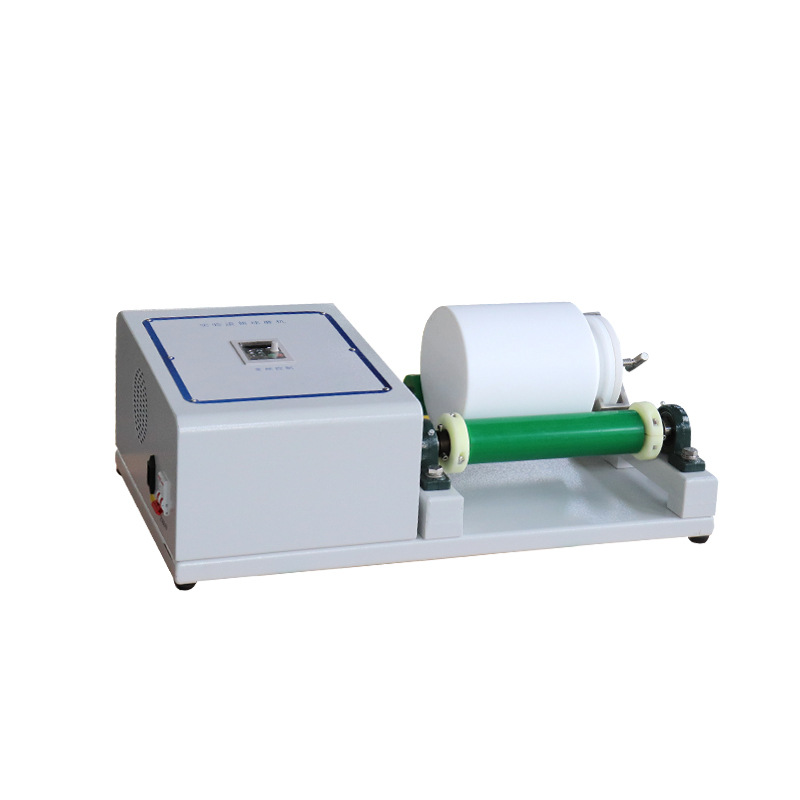
The promise of nanotechnology is built on a fundamental premise: controlling matter at the scale of individual atoms and molecules. For researchers across material science, pharmaceuticals, and energy storage, this often begins with creating a powder where the primary particles measure in the tens of nanometers. While a standard laboratory ball mill can readily achieve micron-scale powders, the leap to consistent, unagglomerated nanoscale particles represents a different regime of physics and process engineering. It is not merely about running a standard mill longer; it is about orchestrating a controlled, high-energy mechanical process that repeatedly fractures particles down to their crystalline or molecular limits while preventing their spontaneous recombination. This journey from microns to nanometers is defined by seven pivotal, interconnected steps. Mastering this sequence transforms your ball mill from a simple grinder into a powerful nanomaterial synthesis reactor.
Step 1: The Paradigm Shift – From Communition to Mechanical Activation
The first step is conceptual. Grinding to 10 microns is primarily about fracture. Grinding to 10 nanometers is about fatigue, defect accumulation, and ultra-refinement.
-
Micron-Level Goal: Break chemical bonds and overcome the material’s fracture toughness to create new surfaces.
-
Nanoscale Goal: Introduce an immense density of lattice defects (dislocations, grain boundaries). The stored mechanical energy makes the material increasingly brittle and prone to fragmentation down to the smallest structurally stable units. This process, central to High-Energy Ball Milling (HEBM) or Mechanical Alloying, requires a specific energy input far beyond that needed for coarse grinding.
-
Action Point: Acknowledge that achieving nanoparticles, especially for ductile metals or hard ceramics, will require significantly higher energy inputs, precise control, and potentially longer or more intense milling cycles than you are accustomed to.
Step 2: Selecting the Right Engine – High-Energy Planetary Mills are Non-Negotiable
Not all ball mills are created equal for nanomilling. The energy intensity is paramount.
-
The Critical Factor: Centrifugal Acceleration (g-force). Standard horizontal roller mills operate at 1g. High-energy planetary ball mills generate forces from 10g to over 50g. This order-of-magnitude increase in kinetic energy is what propels media at velocities sufficient to induce the severe plastic deformation needed for nano-refinement.
-
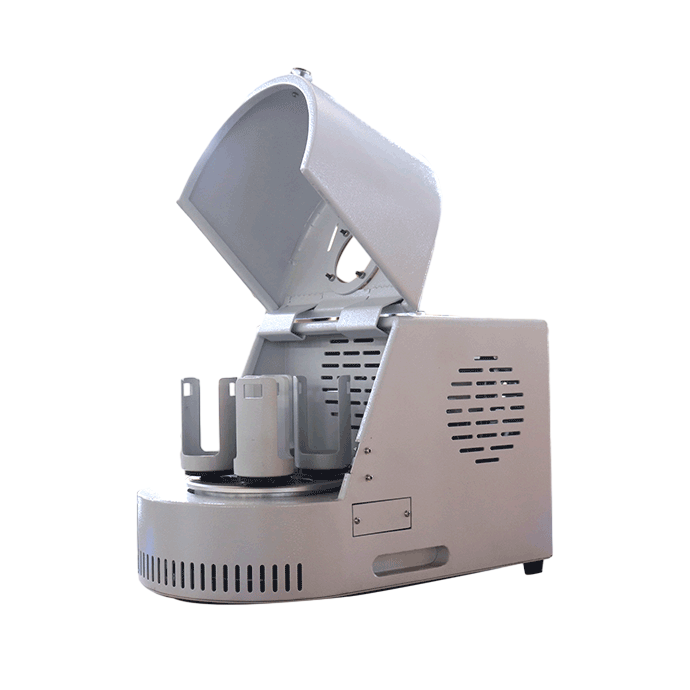
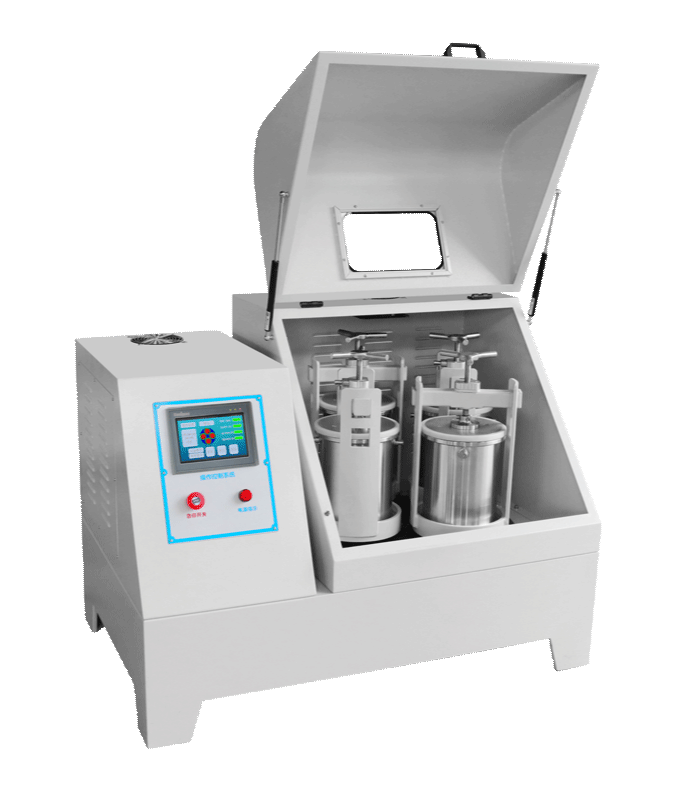
Machine Choice: For consistent nanomilling, a planetary ball mill is the default starting point. Ensure the model is capable of sustained high-speed operation. Specialized shaker mills (e.g., SPEX-type) deliver even higher impact energies for small batches but are less common for general lab use.
-
TENCAN Application: For high-energy nano-synthesis, planetary ball mills from the XQM series are engineered to provide the stable, high-g-force environment necessary. Their robust drive systems maintain critical kinematics under demanding loads.
Step 3: The Geometry of Fracture – Optimizing Media Size, Material, and Load
At the nanoscale, the grinding media become tools for atomic-level deformation.
-
Media Size: A blend of sizes is superior. Larger media (Φ10-15mm) initiate fracture in remaining micron-sized particles. Smaller media (Φ3-5mm, even down to 1mm) are essential for the final nano-polishing stage, providing the vast number of contact points needed to refine particles homogeneously. A mix ensures a continuous size reduction path.
-
Media Material & Density: Hardness and density are critical. High-density media (like zirconia (ZrO₂) or tungsten carbide (WC)) deliver higher impact momentum for the same size. The media must be significantly harder than your sample to avoid wear and catastrophic contamination, which is especially detrimental at the nanoscale where surface area is enormous.
-
Ball-to-Powder Ratio (BPR): This must be increased. For nano-milling, BPRs often range from 15:1 to 30:1 or higher. This ensures a high probability of impact per particle per unit time. The high media load drives the repeated cold welding and fracturing cycles essential for mechanical alloying and ultimate size reduction.
Step 4: Mastering Energy Input – Speed, Time, and the “Cool-Down” Cycle
Precision control over energy delivery prevents wasted effort and material damage.
-
Optimal Speed: Operate at 70-85% of the mill’s maximum rated speed. This is typically within the “cascading” regime where media impact energy is maximized. Running at 100% often leads to centrifugal “pinning,” where media stick to the jar wall, ceasing grinding action.
-
Milling Time & The Plateau Effect: Nanomilling is not linear. Particle size will drop rapidly initially, then approach an equilibrium size. Further milling beyond this plateau may only increase contamination, induce unwanted phase changes, or cause reaggregation. Determine this limit experimentally via time-series trials with particle size analysis.
-
Crucial: Use Interval Milling. Program the mill to run in cycles (e.g., 15 minutes ON, 5-10 minutes OFF). This is non-negotiable for heat-sensitive materials. The pause allows dissipation of the intense localized heat generated at impact sites, preventing thermal degradation, recrystallization, or agglomeration of nano-particles.
Step 5: The Battle Against Agglomeration – Wet Milling and Dispersants
As particles approach the nanoscale, surface energy becomes enormous, driving them to agglomerate to reduce their exposed area.
-
Wet Milling is Often Essential: Introducing a liquid medium (solvent) is one of the most effective ways to produce discrete nanoparticles. The liquid acts as:
-
A coolant, managing temperature.
-
A dispersion medium, preventing newly created nano-surfaces from finding each other and cold-welding.
-
A cushion that can be tuned to control impact severity.
-
Choosing a Process Control Agent (PCA): In dry milling, a small amount (0.5-2 wt%) of a surfactant or organic solvent (e.g., stearic acid, ethanol) can be added. It adsorbs onto fresh particle surfaces, creating a protective monolayer that minimizes agglomeration. In wet milling, proper dispersants (e.g., polyacrylic acid for oxides) are critical for maintaining a stable nano-suspension post-milling.
Step 6: Controlling the Atmosphere – The Invisible Variable
For many advanced nanomaterials (metals, battery materials, alloys), air is the enemy.
-
The Problem: Nanoparticles have immense surface area ready for oxidation or reaction. Milling in air can create a core-shell structure where the desired nano-core is coated with an oxide layer, altering properties.
-
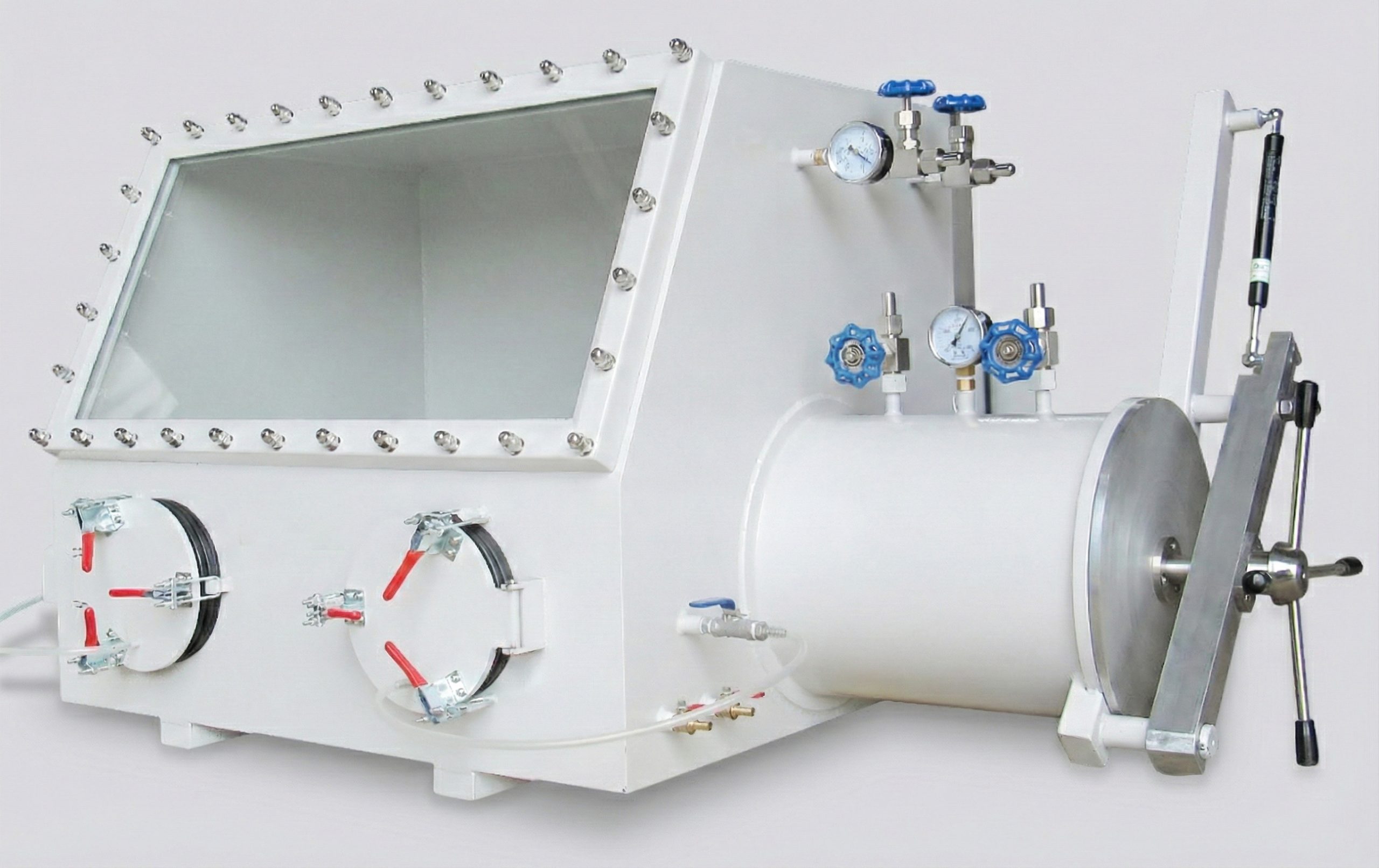
The Solution: Inert Gas or Vacuum Milling. Use sealed milling jars equipped with valves. Evacuate the jar and backfill with high-purity argon or nitrogen before and during milling. This is mandatory for mechanical alloying of reactive elements or processing air-sensitive materials like lithium battery components.
-
TENCAN Application: For such critical applications, vacuum/inert gas milling jars are used in conjunction with planetary mills. These specialized jars enable the entire nano-refinement process to occur in a protected, controlled environment, preserving the material’s intrinsic properties.
Step 7: Post-Milling Processing – Separation and Characterization
The process does not end when the mill stops. What comes out is a “product” that requires careful handling.
-
Separation from Media: Use sieves to cleanly separate the fine powder from the larger grinding media. For wet milling, simply decant the suspension.
-
Ultrasonic Dispersion: Before any size measurement, subject the powder (in a liquid) to ultrasonic irradiation. This breaks apart weak agglomerates held together by van der Waals forces, allowing you to measure the primary nanoparticle size, not the agglomerate size.
-
Accurate Characterization: Do not rely on a single method. Use laser diffraction for a broad overview of the distribution, but confirm with BET surface area analysis (which calculates an equivalent spherical diameter) or direct imaging via Transmission Electron Microscopy (TEM) to see true primary particle size and morphology.
Conclusion: A Symphony of Control
Pushing ball milling to its nanoscale limit is a symphony of controlled, extreme mechanical energy. It requires shifting from a brute-force fracturing mindset to one of precision-activation, where every parameter—from the density of a grinding ball to the milliseconds of a pause cycle—is tuned to guide a material down an energy landscape toward its smallest, most useful form. By systematically addressing these seven steps—embracing high-energy kinematics, engineering the media environment, managing energy input with temporal precision, defeating agglomeration, controlling atmospheric chemistry, and applying rigorous post-processing—you transform your laboratory ball mill into a potent instrument of nanotechnology. The limit is no longer just the machine’s power, but your understanding of the complex dance between force, time, and matter at the frontier of the very small.


4-拷贝-scaled.png)
-拷贝-scaled.png)